PU Mortar·
Thermal Shock: What It Is and Why Your Cold Storage Floor Cracks
If your freezer room floor is cracking or delaminating, thermal shock is almost certainly the cause.
Read article
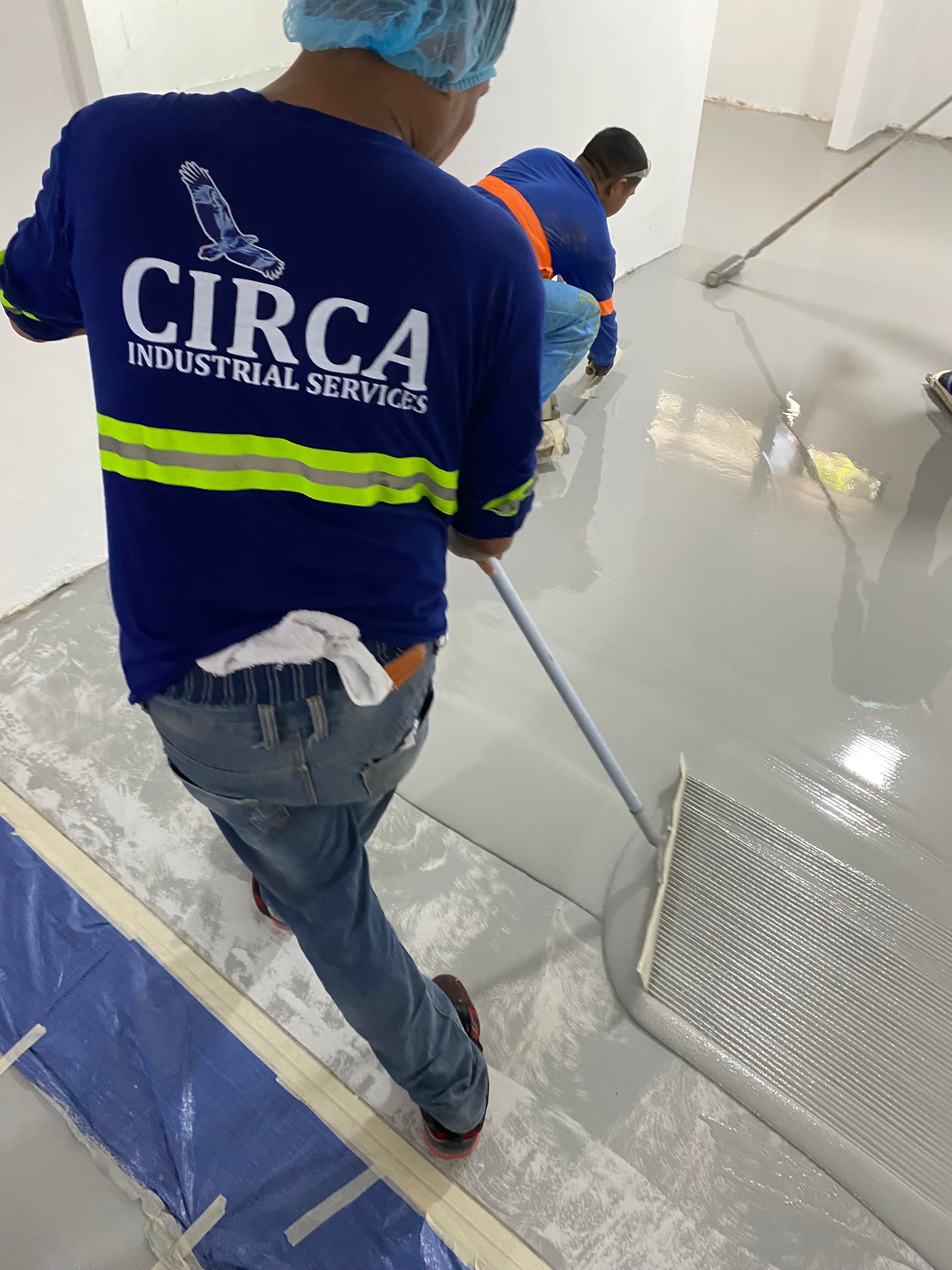
If you manage a food production facility in the Philippines — a commissary, a meat processing plant, a beverage factory, or a cold storage operation — your floor is one of the most critical surfaces in your building. It takes forklift traffic, steam cleaning, chemical washdowns, dropped loads, and constant foot traffic. And it has to comply with HACCP and food safety standards at the same time.
Standard epoxy floors are widely used in industrial settings, and they work well in many applications. But in food factories, they consistently fall short. The reason comes down to three specific demands that epoxy cannot reliably meet simultaneously: thermal cycling, chemical resistance to cleaning agents, and the seamless, non-porous surface that food safety regulations require.
Epoxy is a rigid material. When it's applied to a concrete substrate and then subjected to repeated temperature changes — hot water from steam cleaning, cold air from refrigeration, ambient heat from cooking equipment — it expands and contracts at a different rate than the concrete beneath it. Over time, this differential movement causes the epoxy to crack, delaminate, and lift at the edges.
Once the surface is compromised, bacteria and moisture get underneath. In a food production environment, that's not just a maintenance problem — it's a food safety violation. Cracks and delamination in a food factory floor can fail a HACCP audit and shut down production.
Key fact
Epoxy has a thermal expansion coefficient roughly 5–7× higher than concrete. In food factories with daily steam cleaning cycles, this mismatch causes visible delamination within 2–3 years — sometimes sooner in cold storage areas.
Polyurethane mortar (PU Mortar) is a three-component system: a polyurethane resin binder, a hardener, and an aggregate filler. The result is a floor that is simultaneously flexible and extremely hard — it can absorb the mechanical stress of thermal cycling without cracking, while still resisting the abrasion of forklift tyres and heavy foot traffic.
The flexibility comes from the polyurethane chemistry. Unlike epoxy, which cures into a brittle, glass-like film, PU Mortar retains a degree of elasticity after curing. This allows it to move with the substrate as temperatures change, without losing adhesion or developing cracks.
PU Mortar can withstand temperatures from −40°C to +120°C without delaminating. This makes it the only viable system for facilities that use steam cleaning (up to 100°C) or operate cold storage areas (down to −25°C or lower). Epoxy fails at both extremes.
Food factories use aggressive cleaning chemicals — caustic soda, quaternary ammonium compounds, chlorine-based sanitisers. PU Mortar is formulated to resist these agents without softening, blistering, or discolouring. The surface remains intact and cleanable after years of daily chemical exposure.
PU Mortar is installed as a seamless, coved system — the floor curves up to meet the wall with no joint or gap where bacteria can accumulate. The surface is non-porous and can be cleaned to food-safe standards. It meets the requirements of HACCP, GMP, and international food safety frameworks including BRC and SQF.
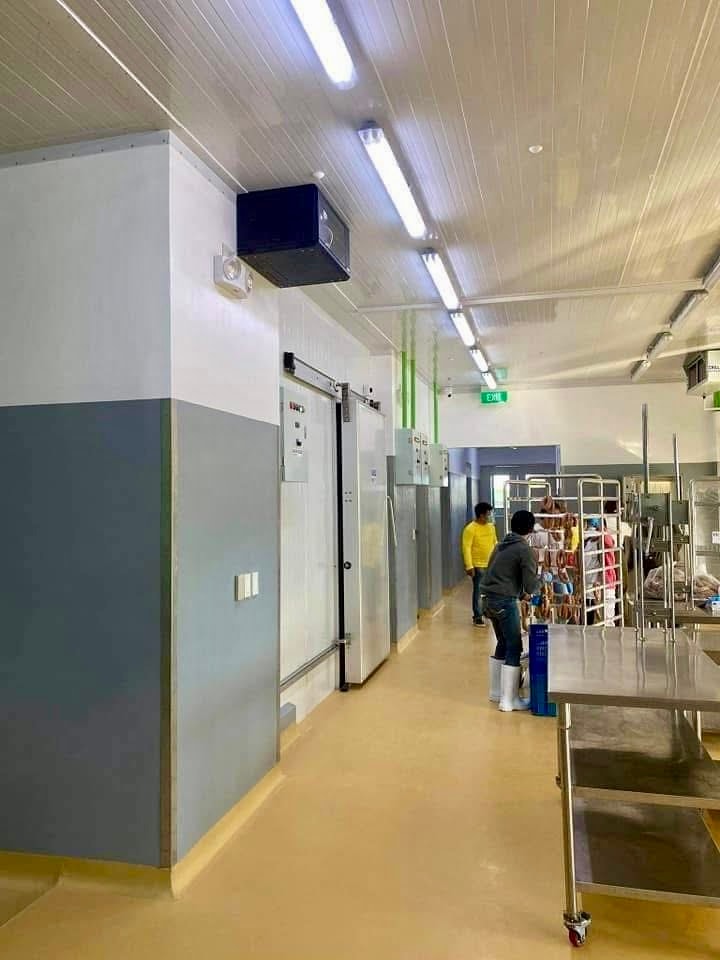
We've installed PU Mortar systems across a range of food production facilities in Luzon, including:
In every case, the decision to use PU Mortar over epoxy came down to the same factors: the facility uses hot water or steam for cleaning, operates at low temperatures, or needs to pass a third-party food safety audit. If any of those apply to your facility, PU Mortar is the correct system.
PU Mortar costs more per square metre than standard epoxy — typically 30–50% more, depending on the system specification and substrate condition. That's a real difference, and we don't minimise it.
But the comparison changes when you factor in service life. A well-installed PU Mortar floor in a food factory typically lasts 10–15 years with proper maintenance. An epoxy floor in the same environment may need full replacement in 3–5 years. When you account for the cost of downtime, removal, and reinstallation, PU Mortar is almost always the more economical choice over a 10-year horizon.
There's also the cost of a failed audit. A floor that cracks and delaminates under HACCP inspection doesn't just need repair — it can trigger a production halt. The cost of one day of lost production in a food factory typically exceeds the price difference between epoxy and PU Mortar for the entire floor area.
If you operate a food production facility and you're choosing a floor system, PU Mortar is not the premium option — it's the correct option. Epoxy is a fine floor for dry warehouses, offices, and light manufacturing. In food factories, it's the wrong tool for the job.
We've seen too many facilities install epoxy to save on upfront cost, only to replace it within a few years at far greater total expense. If you're planning a new installation or a floor replacement, we're happy to do a site assessment and give you an honest recommendation — even if that recommendation turns out to be something other than PU Mortar.
Planning a food factory floor?
We'll assess your facility and recommend the right system — no obligation.
If your freezer room floor is cracking or delaminating, thermal shock is almost certainly the cause.
Read article
Both are resin floors — but they perform very differently under real industrial conditions.
Read article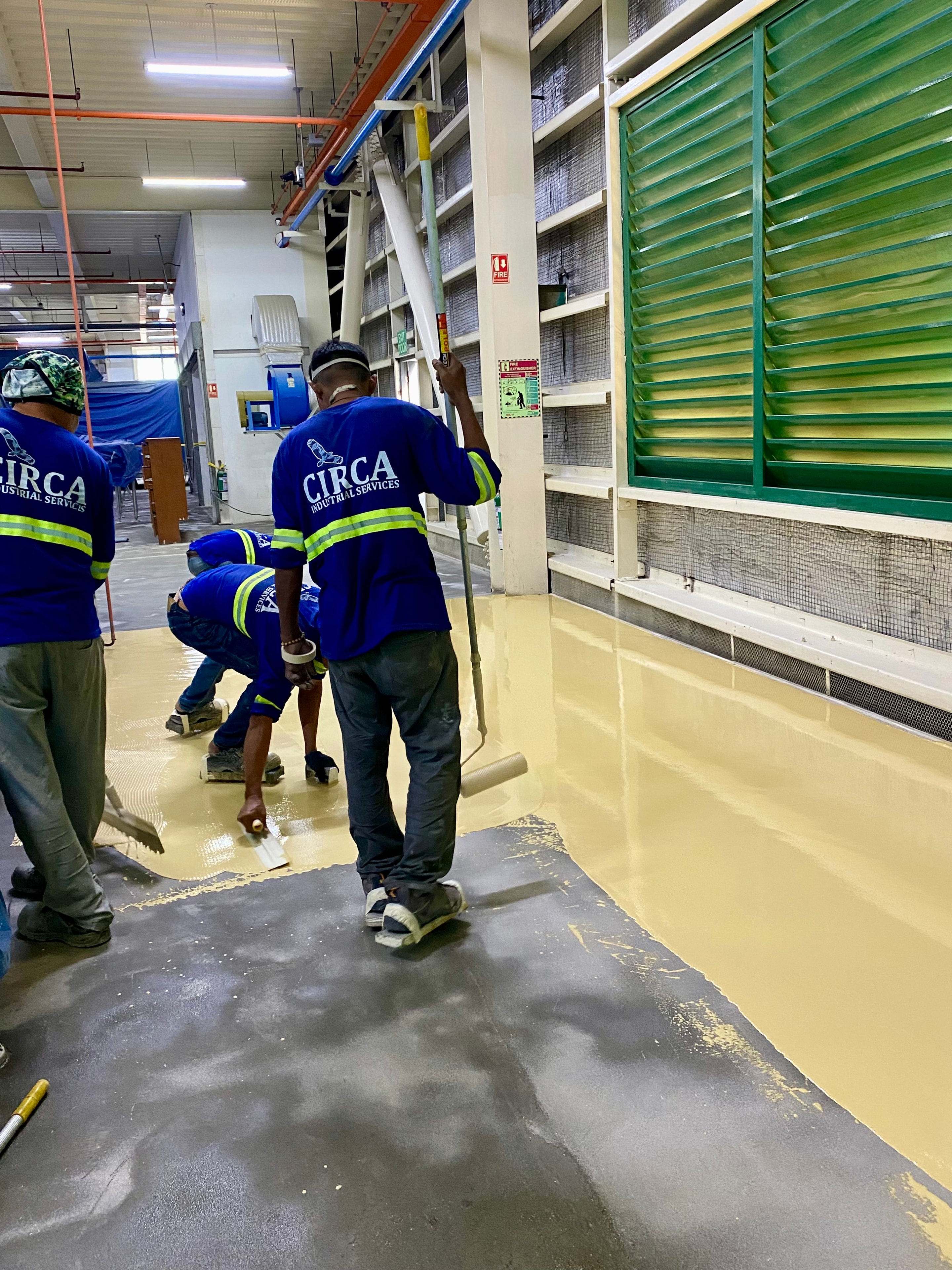
The right cleaning routine can double the service life of your resin floor.
Read articleFor estimates, please contact us at your convenience. We look forward to meeting you soon.
Address
Lot 24 Block 2 Horacio Aquino Street,
Green Valley Subdivision, Barangay San Francisco,
San Pablo City, Laguna, Philippines 4000
Mobile
+63 961 577 5115Hours
Monday–Saturday 8AM–5PM
Sunday: Closed