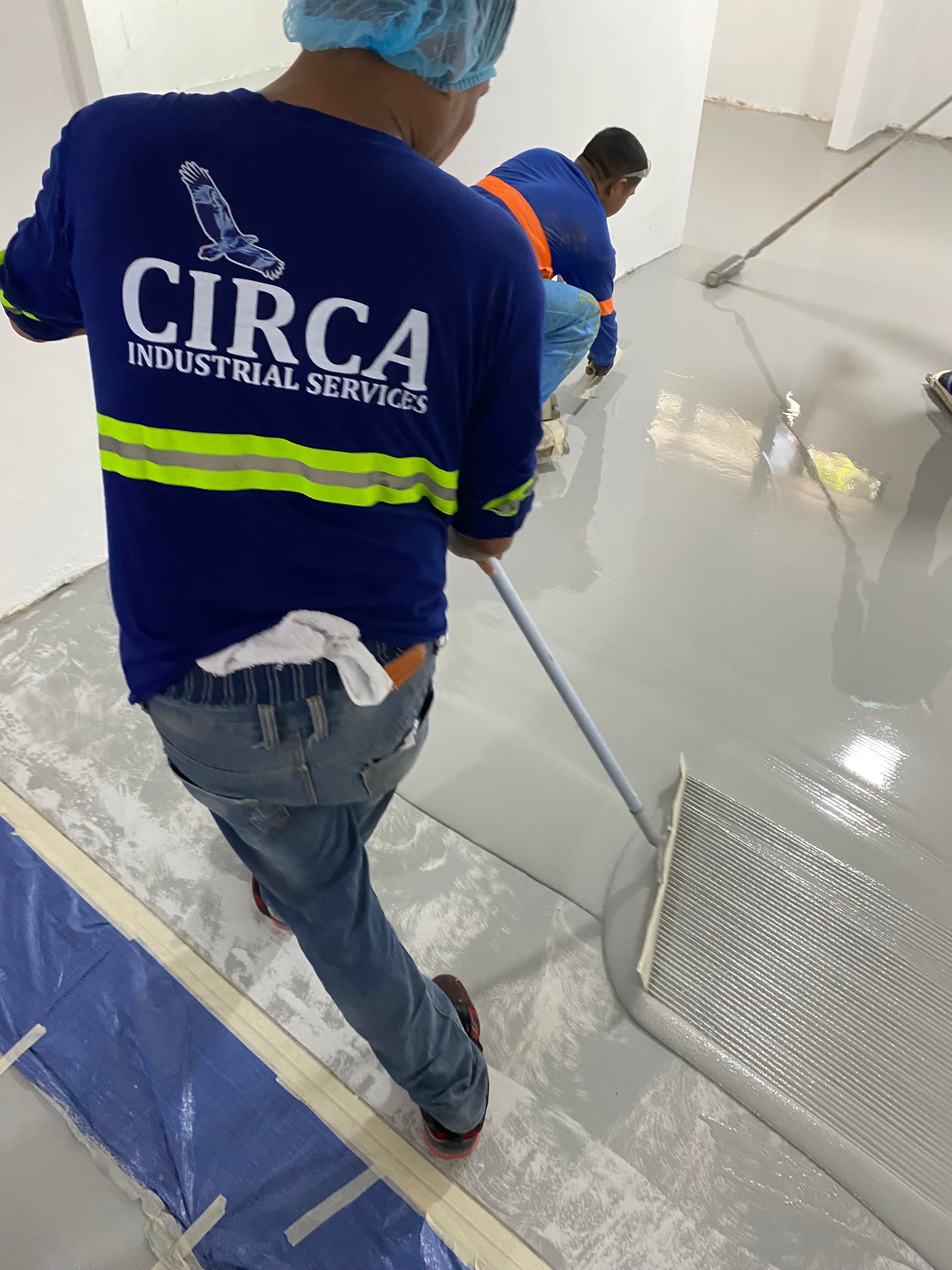
PU Mortar·
Why PU Mortar is the Only Choice for Food Factories
Steam cleaning, forklift traffic, and HACCP compliance — standard epoxy simply cannot handle all three.
Read article
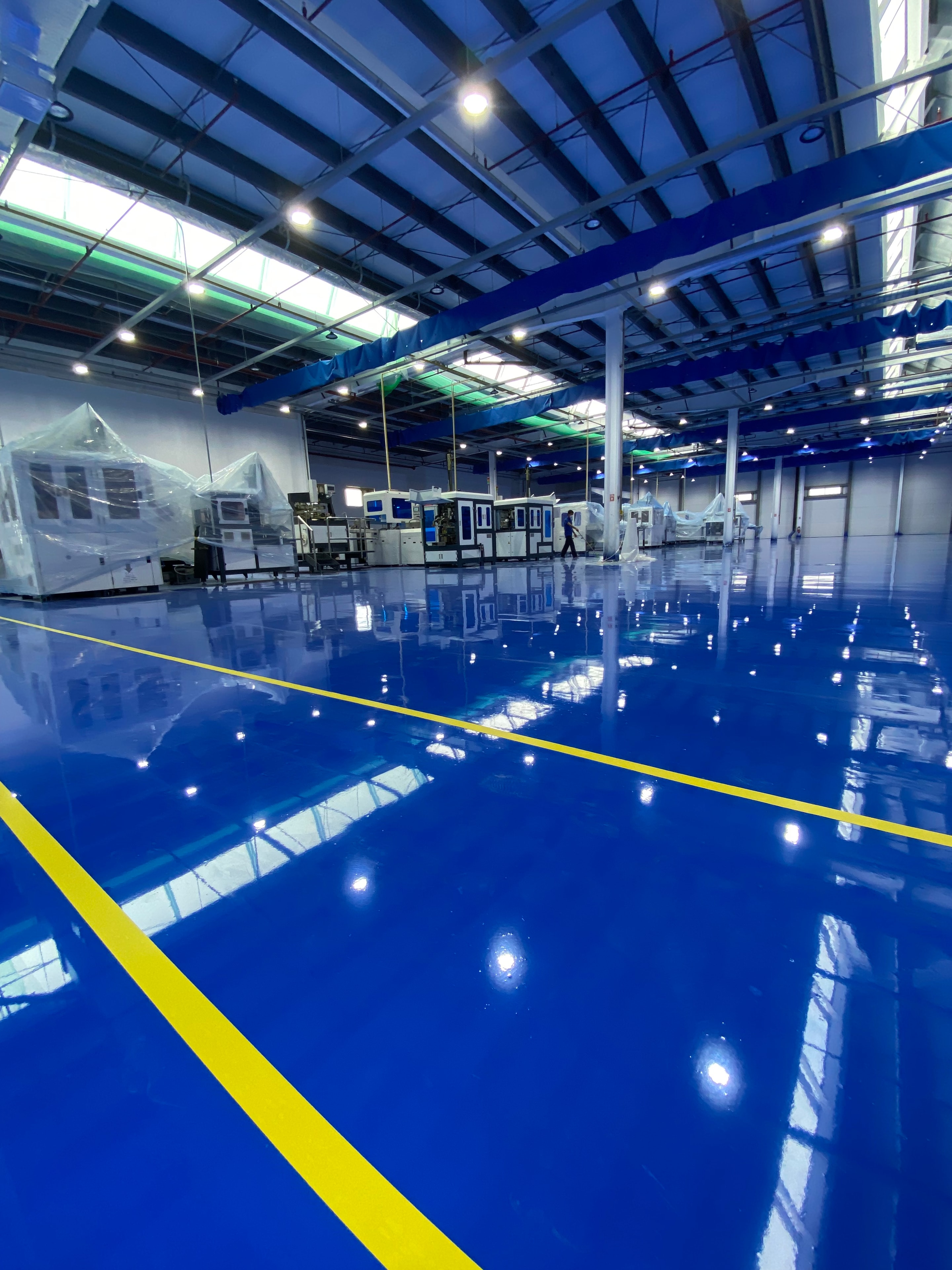
When a facility manager asks us to quote a floor, the first question we ask is not 'what's your budget?' — it's 'what does this floor need to survive?' The answer to that question almost always determines whether the right system is epoxy or polyurethane mortar (PU Mortar). Getting it wrong is expensive.
Both systems are resin floors. Both are durable, seamless, and available in a range of finishes. But their chemistry, performance envelopes, and ideal applications are fundamentally different. This guide explains those differences clearly so you can make the right specification the first time — not after a failed floor.
Epoxy flooring is a two-component system: an epoxy resin and a hardener that react when mixed to form a rigid, thermoset polymer. Once cured, it is hard, smooth, and highly resistant to abrasion and many chemicals. It bonds well to prepared concrete and is available in a wide range of thicknesses — from thin decorative coatings (1–2mm) to heavy-duty self-levelling systems (3–6mm) and epoxy mortar builds (6–12mm).
Polyurethane mortar is a three-component system: a polyurethane resin, a hardener, and an aggregate filler (typically quartz or bauxite). The aggregate gives it a much thicker build (typically 6–9mm) and a textured, slip-resistant surface. Unlike epoxy, the polyurethane binder retains elasticity after curing — it can flex slightly rather than cracking under stress. This elasticity is the key to its performance in demanding environments.
This is the most important difference for most Philippine industrial facilities. Epoxy becomes brittle below 0°C and softens above 60°C. PU Mortar is rated for continuous service from −40°C to +120°C and handles rapid temperature changes (thermal shock) without cracking or delaminating. If your facility has cold storage, blast freezers, steam cleaning, or autoclaving, PU Mortar is the only viable option.
Both systems offer good general chemical resistance, but PU Mortar outperforms epoxy in environments with organic acids — lactic acid, acetic acid, citric acid — which are common in food and beverage production. Epoxy can be degraded by prolonged contact with these acids; PU Mortar is specifically formulated to resist them.
The aggregate in PU Mortar gives it an inherently textured, slip-resistant surface — important in wet processing areas, food factories, and anywhere water or process fluids are present. Epoxy can be made slip-resistant with broadcast aggregate, but the texture is a surface treatment rather than integral to the system, and it can wear smooth in high-traffic areas over time.
Both systems are seamless and non-porous when correctly installed. PU Mortar has an advantage in food production environments because it maintains its integrity under steam cleaning and thermal cycling — conditions that cause epoxy to crack and create harbourage points for bacteria. A cracked epoxy floor in a food factory is a HACCP non-conformance; a PU Mortar floor under the same conditions remains compliant.
Epoxy is less expensive to install — typically 30–50% lower upfront cost than PU Mortar for equivalent coverage. In the right environment (dry, ambient temperature, no thermal cycling, no organic acid exposure), epoxy delivers excellent value. In the wrong environment, the lower upfront cost is offset by earlier failure, repeated repair cycles, and eventual full replacement. Over a 10-year horizon in a food factory or cold storage facility, PU Mortar is almost always the lower-cost option.
| Property | Epoxy | PU Mortar |
|---|---|---|
| Typical thickness | 1–12mm depending on system | 6–9mm standard build |
| Temperature range | −5°C to +60°C (practical) | −40°C to +120°C |
| Thermal shock resistance | Poor — cracks under cycling | Excellent — designed for it |
| Organic acid resistance | Moderate | High |
| Slip resistance | Moderate (broadcast aggregate option) | High (integral aggregate) |
| Steam cleaning | Not recommended above 60°C | Rated to 100°C |
| HACCP suitability | Suitable in ambient dry areas | Suitable in all food zones |
| Upfront cost | Lower | 30–50% higher |
| Expected service life (right environment) | 10–15 years | 10–15 years |
| Expected service life (wrong environment) | 1–3 years before failure | Remains appropriate |
Epoxy is an excellent floor system in the right environment. Specify it when: the facility operates at ambient temperature with no thermal cycling; there is no steam cleaning or hot water above 60°C; chemical exposure is limited to oils, fuels, and mild cleaning agents; the floor is primarily a dry warehouse, workshop, parking structure, or light manufacturing area; and budget is a primary constraint and the environment genuinely suits epoxy.
PU Mortar is the correct specification whenever the environment exceeds what epoxy can reliably handle. Specify it when: the facility has cold storage, blast freezers, or any area subject to thermal cycling; steam cleaning or hot water above 60°C is part of the cleaning regime; organic acids (lactic, acetic, citric) are present in the process; HACCP compliance is required and the floor must remain seamless and crack-free; or the cost of floor failure — downtime, contamination risk, replacement — is high.
The most common mistake we see
Specifying epoxy in a food factory or cold storage facility because it's cheaper. The floor looks fine for 12–18 months, then cracks appear near doorways and drains. Within 3 years the floor needs full replacement — at a cost higher than PU Mortar would have been in the first place, plus the disruption of a second installation.
The choice between epoxy and PU Mortar is not primarily a budget decision — it's an environment decision. Epoxy in the right environment is excellent value. Epoxy in the wrong environment is a recurring cost. PU Mortar is more expensive upfront, but in demanding environments it's the only system that doesn't need to be replaced.
If you're not sure which system is right for your facility, we're happy to assess the site and give you an honest recommendation. We install both systems — our interest is in specifying the right one, not the more expensive one.
Not sure which system is right for your facility?
We'll assess your environment and give you a straight recommendation.
Steam cleaning, forklift traffic, and HACCP compliance — standard epoxy simply cannot handle all three.
Read article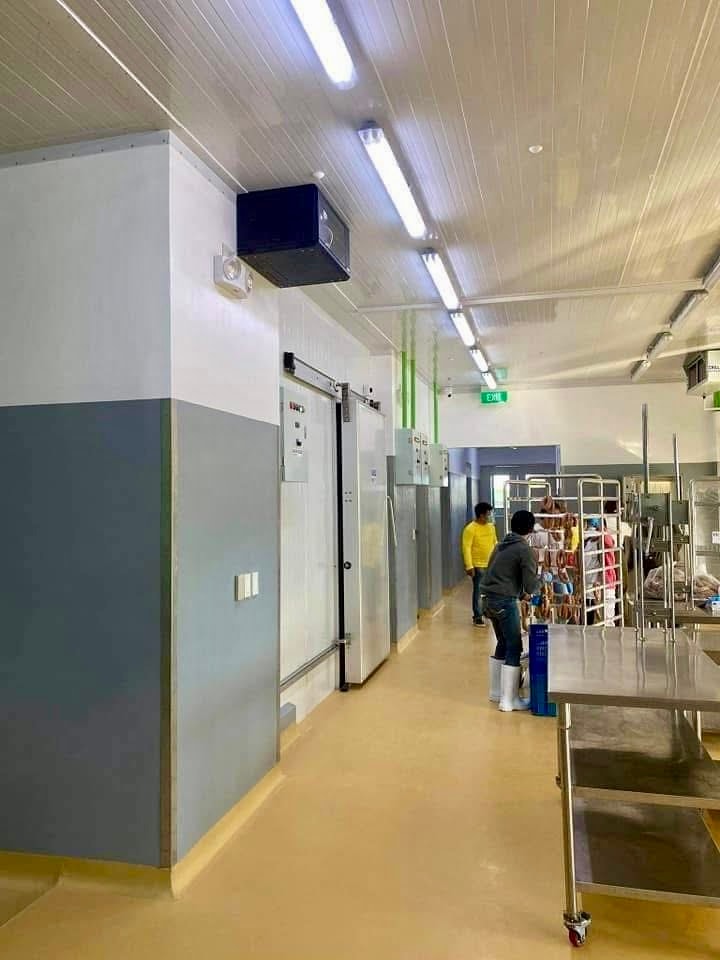
If your freezer room floor is cracking or delaminating, thermal shock is almost certainly the cause.
Read article
The right cleaning routine can double the service life of your resin floor.
Read articleFor estimates, please contact us at your convenience. We look forward to meeting you soon.
Address
Lot 24 Block 2 Horacio Aquino Street,
Green Valley Subdivision, Barangay San Francisco,
San Pablo City, Laguna, Philippines 4000
Mobile
+63 961 577 5115Hours
Monday–Saturday 8AM–5PM
Sunday: Closed