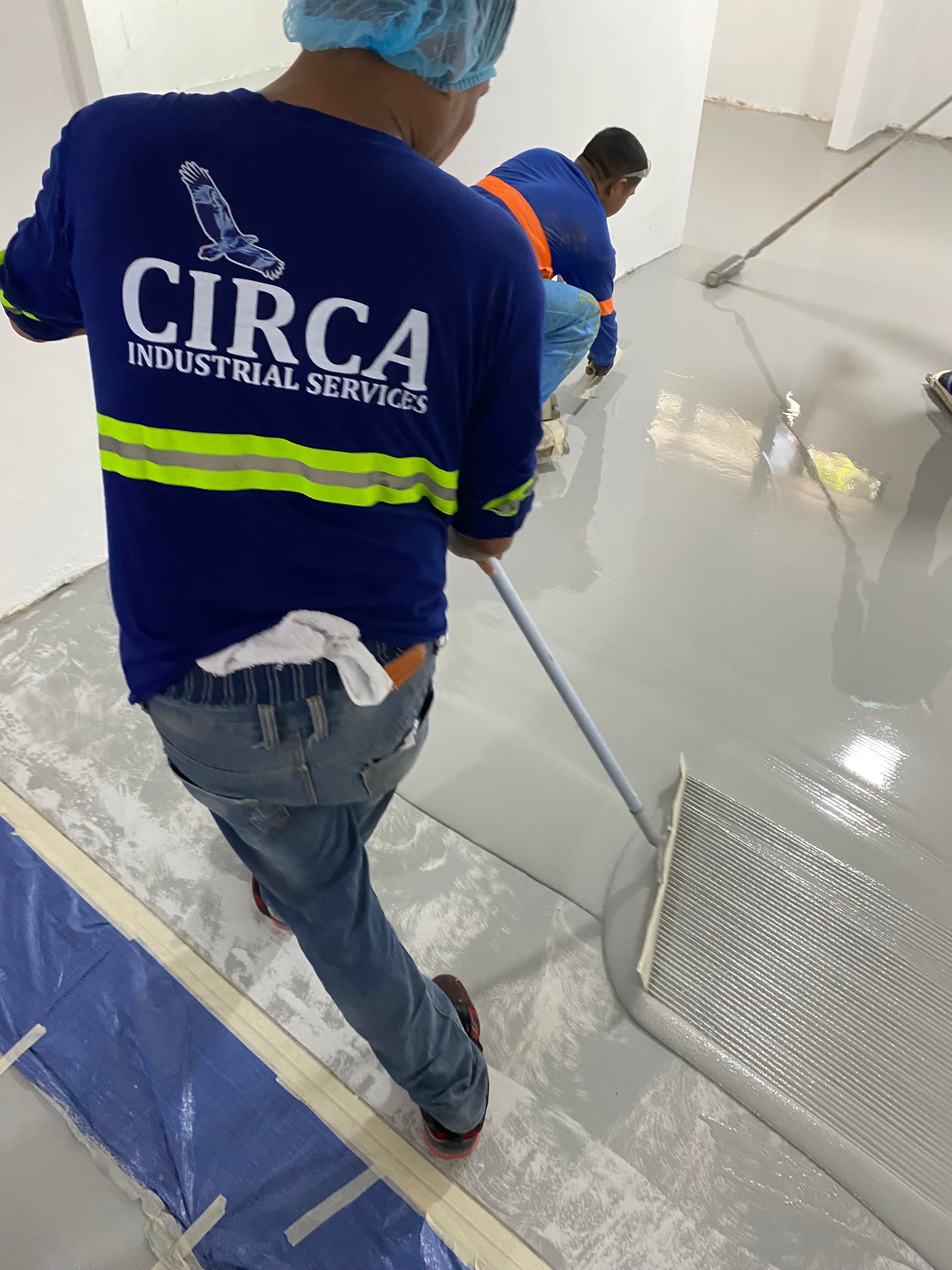
PU Mortar·
Why PU Mortar is the Only Choice for Food Factories
Steam cleaning, forklift traffic, and HACCP compliance — standard epoxy simply cannot handle all three.
Read article

Warehouse and logistics facility managers face a recurring problem: floor coatings that look good on day one and deteriorate steadily from there. Epoxy peels under forklift traffic. Paint chips and needs reapplication every year or two. Every maintenance cycle means downtime, cost, and disruption to operations.
Polished concrete solves this by eliminating the coating entirely. Instead of applying a film on top of the concrete, the concrete itself is ground, densified, and polished to a hard, reflective surface. There's nothing to peel, nothing to recoat, and nothing to fail. For dry warehouses and logistics centres, it's the most practical long-term floor available.
Polished concrete is not a coating — it's a mechanical and chemical process applied to the concrete substrate itself. The floor is ground with progressively finer diamond tooling to remove surface irregularities, then treated with a chemical densifier that reacts with the concrete to harden and seal it from within. The surface is then polished to the desired gloss level.
The result is a floor that is harder than the original concrete, resistant to dusting, and capable of reflecting light at a level that can significantly reduce the need for artificial lighting in large warehouse spaces. The finish is integral to the slab — it cannot delaminate because it is the slab.
Coated floors fail at the bond line between the coating and the concrete. Polished concrete has no bond line. The hardened surface is the concrete itself, so there is nothing to peel, bubble, or delaminate under forklift tyres or pallet jack traffic.
Untreated concrete dusts — fine particles are released by traffic and abrasion, contaminating stored goods and clogging equipment. The densifier used in polished concrete fills the pores of the slab and eliminates dusting permanently, without any ongoing treatment.
A polished concrete surface is non-porous and smooth. Spills sit on the surface rather than soaking in. Routine cleaning requires only a dust mop or auto-scrubber — no special chemicals, no stripping, no waxing.
A high-gloss polished concrete floor can reflect 30–40% of ambient light back into the space. In a large warehouse with high bays, this can meaningfully reduce lighting energy costs — a benefit that compounds over the life of the floor.
A well-executed polished concrete floor in a dry warehouse typically lasts 20+ years with minimal maintenance. There are no recoating cycles, no stripping and repainting, and no scheduled downtime for floor maintenance.
Polished concrete is available in four gloss levels, from a flat matte finish to a high-gloss mirror surface. The right choice depends on the facility's use and aesthetic requirements.
Level 1 — Flat / Matte
Ground and densified but not polished. Eliminates dusting and improves cleanability. Suitable for back-of-house areas, loading docks, and utility spaces where appearance is secondary.
Level 2 — Satin
Light polish with a low sheen. Practical finish for most warehouse and logistics applications — durable, easy to clean, and presentable without being high-maintenance.
Level 3 — Semi-gloss
Moderate reflectivity. Good for facilities where the floor is visible to clients or visitors, or where light reflectivity is a priority for energy savings.
Level 4 — High-gloss / Mirror
Maximum reflectivity. Typically specified for showrooms, retail spaces, and facilities where the floor is a design feature. Requires more passes and higher-grit tooling.
Polished concrete is an excellent floor for dry environments. It is not suitable for wet processing areas, food production zones that require steam cleaning, or cold storage facilities subject to thermal cycling. In those environments, PU Mortar is the correct specification.
The substrate condition also matters. Polished concrete requires a structurally sound slab with adequate compressive strength. Heavily contaminated concrete, slabs with significant cracking, or substrates with moisture issues need remediation before polishing can proceed. We always assess the substrate before quoting.
Not sure which system is right?
If your facility has both dry warehouse areas and wet processing or cold storage zones, the answer is often a combination of systems — polished concrete in the dry areas, PU Mortar where thermal cycling or hygiene demands are higher. We can specify both in a single project.
We inspect the slab for cracks, contamination, moisture, and compressive strength before specifying the system or quoting.
Coarse diamond grinding removes surface laitance, old coatings, and irregularities. Cracks and spalls are repaired with compatible fillers.
A lithium or sodium silicate densifier is applied and allowed to react with the concrete, hardening the surface from within and eliminating dusting.
The floor is polished through progressively finer grits — typically 400, 800, and 1500 or 3000 — until the specified gloss level is achieved.
A penetrating guard coat can be applied to improve stain resistance and ease of cleaning, particularly in areas with oil or chemical exposure.
For dry warehouses and logistics centres, polished concrete is the most cost-effective floor over a 10–20 year horizon. The upfront cost is comparable to a quality epoxy system, but there are no recoating cycles, no scheduled maintenance downtime, and no recurring material costs.
If you're building a new warehouse, refurbishing an existing facility, or simply tired of repainting the same floor every two years, polished concrete is worth a serious look. We're happy to assess your slab and give you an honest recommendation.
Ready to stop repainting your warehouse floor?
We'll assess your slab and give you a specification that lasts.
Steam cleaning, forklift traffic, and HACCP compliance — standard epoxy simply cannot handle all three.
Read article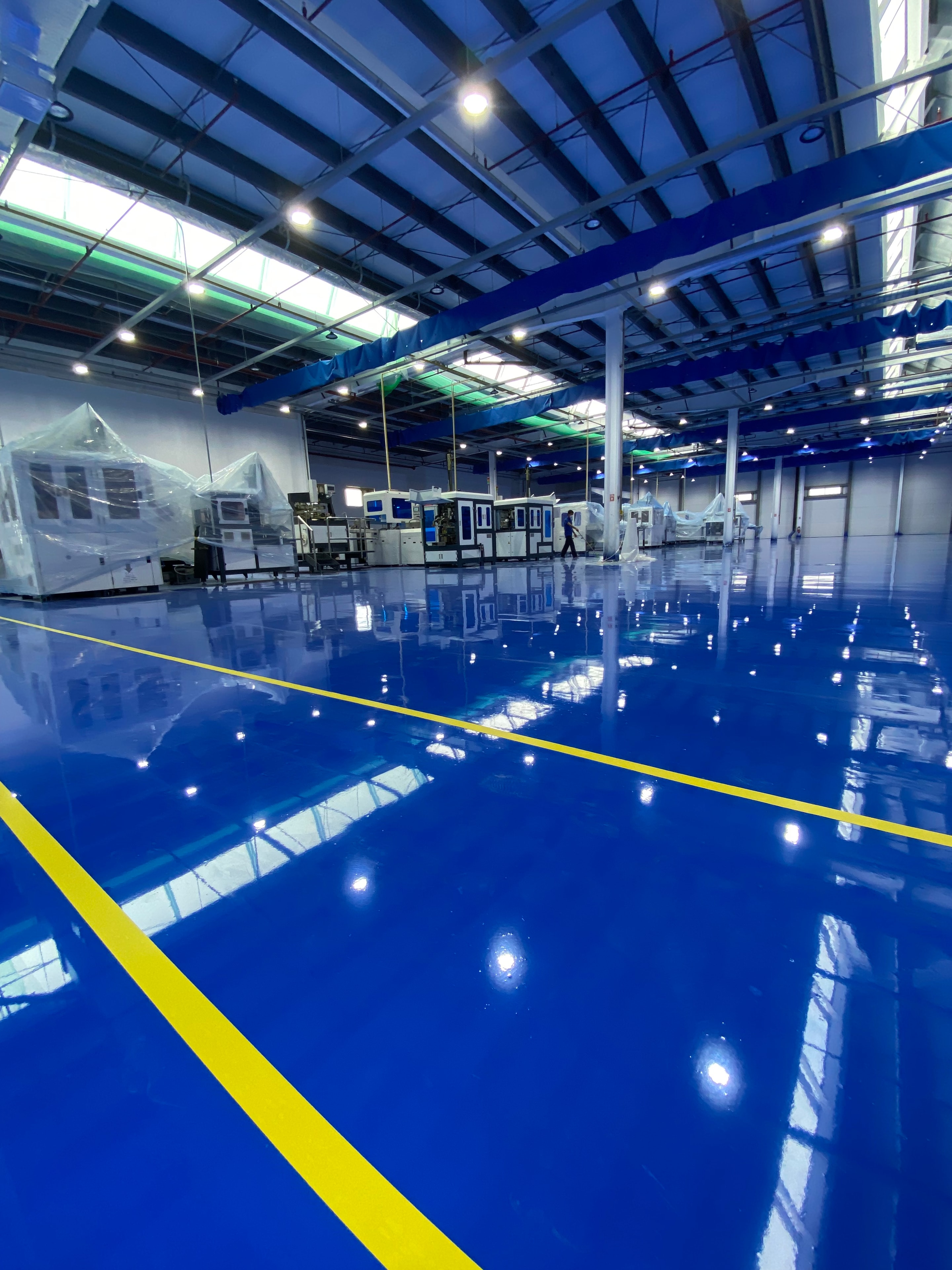
Both are resin floors — but they perform very differently under real industrial conditions.
Read article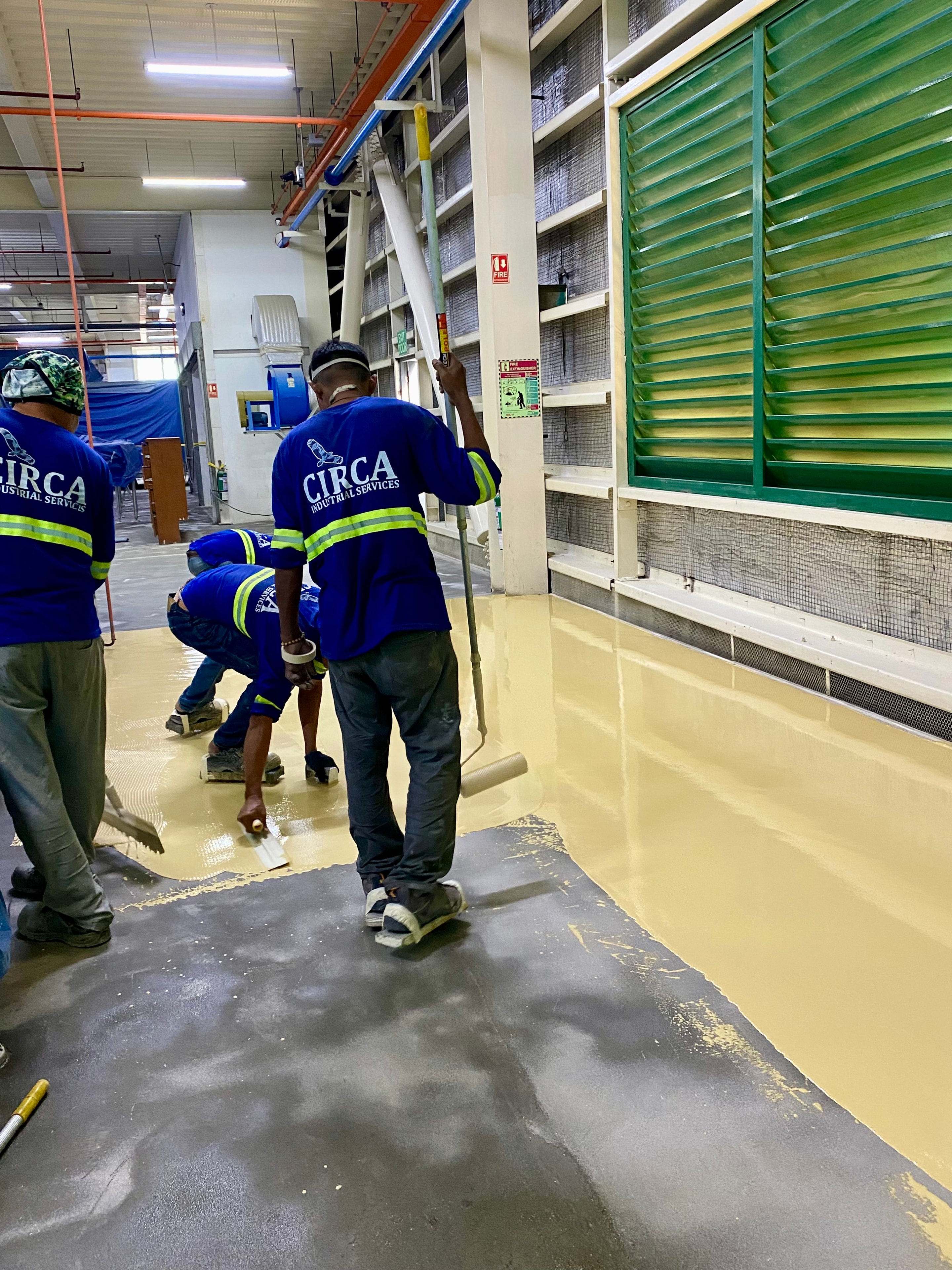
The right cleaning routine can double the service life of your resin floor.
Read articleFor estimates, please contact us at your convenience. We look forward to meeting you soon.
Address
Lot 24 Block 2 Horacio Aquino Street,
Green Valley Subdivision, Barangay San Francisco,
San Pablo City, Laguna, Philippines 4000
Mobile
+63 961 577 5115Hours
Monday–Saturday 8AM–5PM
Sunday: Closed