Epoxy Flooring·
Epoxy vs PU Mortar: Choosing the Right System
Two of the most specified industrial flooring systems — but they serve very different environments. Here is how to choose.
Read article
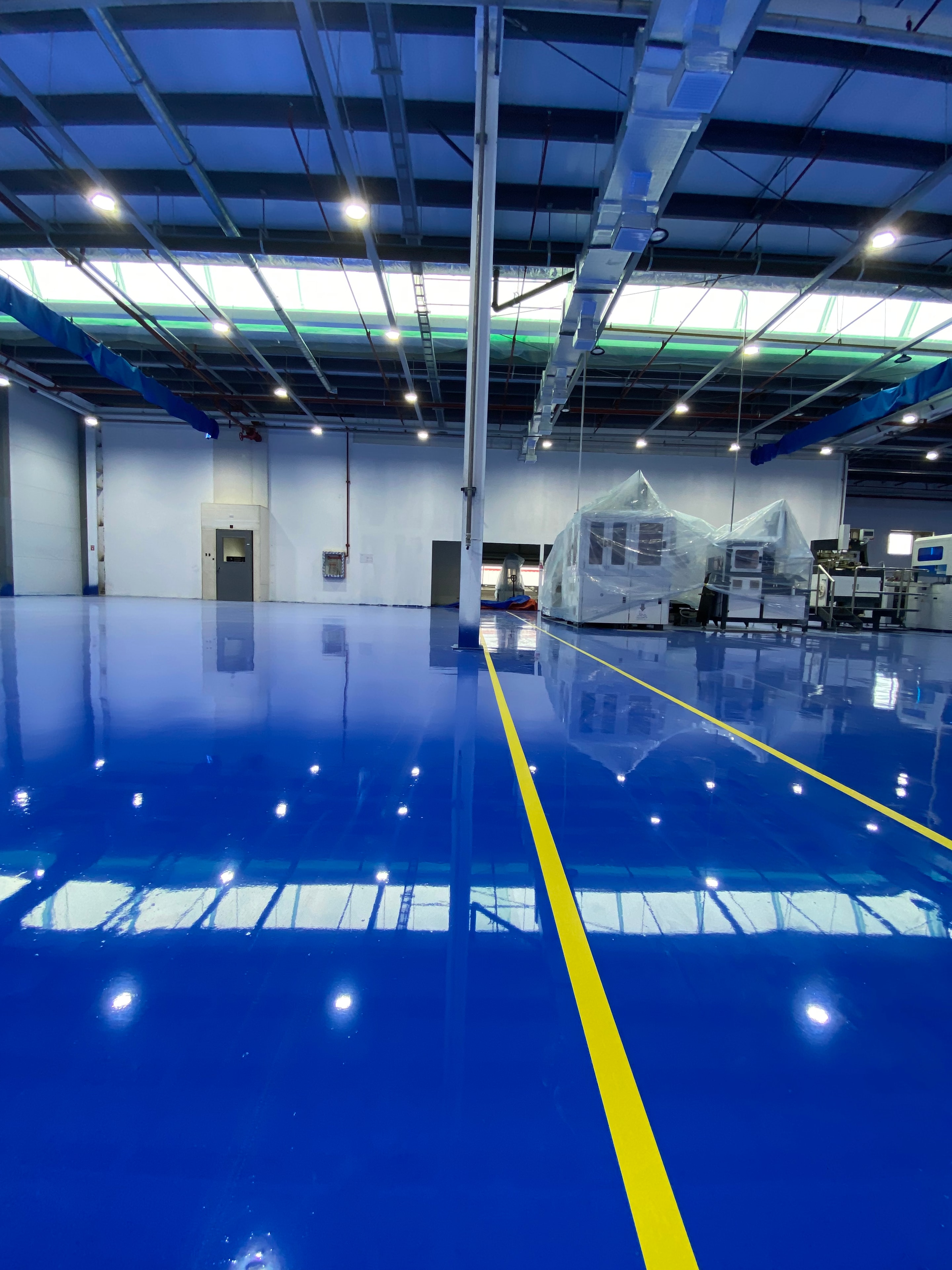
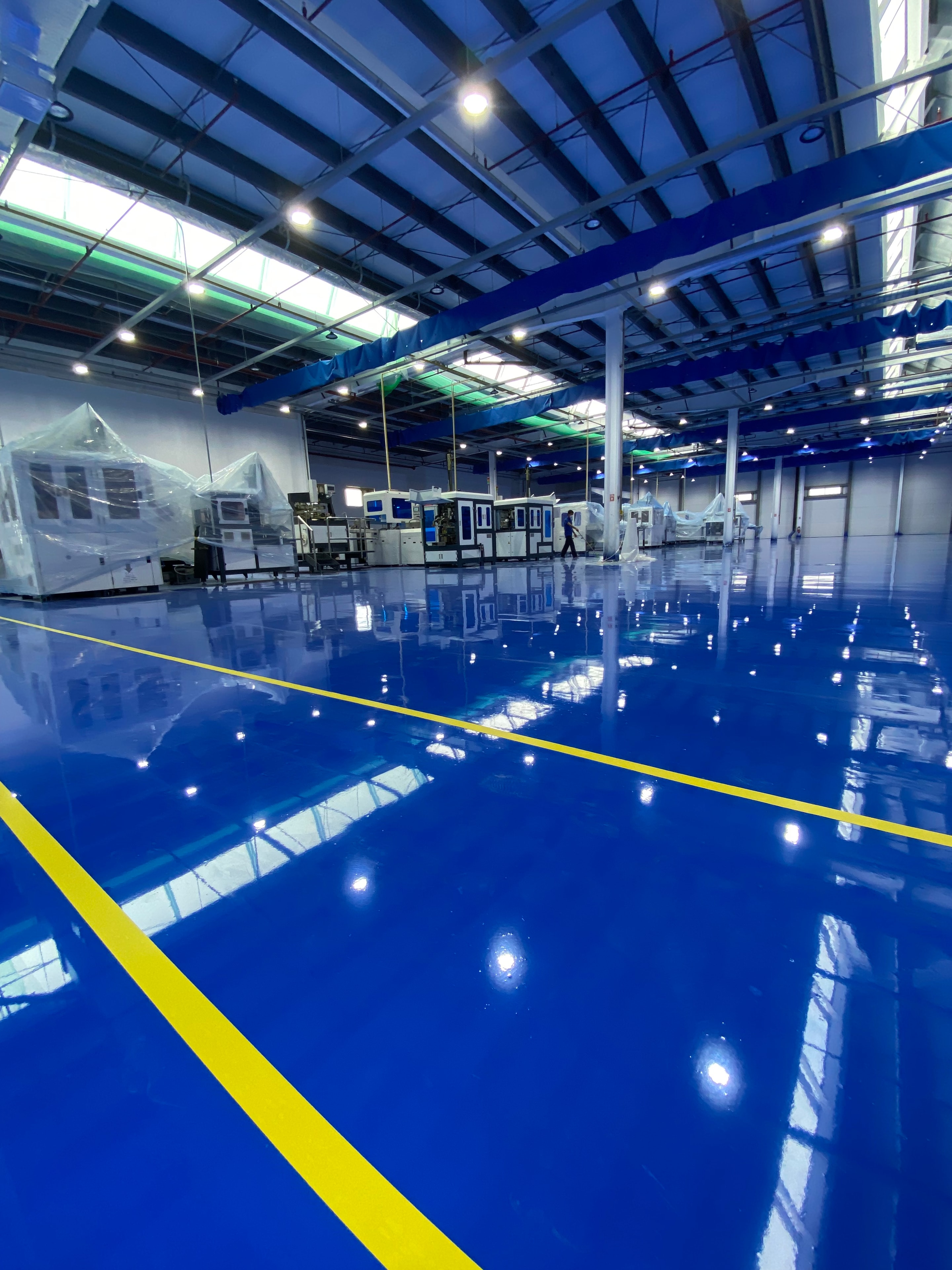
When a factory floor starts showing cracks, pitting, or chemical stains, the instinct is to patch and repaint. But patching buys months — not years. High-build self-leveling epoxy is the upgrade that actually solves the problem.
Applied at 2–4 mm thickness, self-leveling epoxy flows across the substrate and cures into a seamless, mirror-smooth surface that resists chemicals, abrasion, and heavy foot traffic. It's the standard choice for pharmaceutical plants, food-grade warehouses, electronics assembly floors, and commercial facilities where hygiene and durability are non-negotiable.
Self-leveling epoxy is a two-component resin system — epoxy resin plus a hardener — mixed and poured at a high enough viscosity to flow and level under gravity. 'High-build' refers to the applied thickness: typically 2–4 mm in a single coat, compared to the 0.3–0.5 mm of a standard epoxy paint or seal coat.
Thickness
2–4 mm per coat
Finish
Seamless, mirror-smooth
Chemical resistance
Acids, alkalis, solvents, oils
Compressive strength
≥ 70 MPa
Cure time (foot traffic)
24 hours
Full cure
7 days
Poured as a continuous liquid, self-leveling epoxy has no grout lines, no tile joints, and no seams where bacteria, moisture, or chemicals can accumulate. This is critical in food-grade and pharmaceutical environments.
At 2–4 mm, the system fills hairline cracks, surface pitting, and minor undulations in the concrete substrate — without the costly grinding and patching that a thin-coat system demands.
Cured epoxy is highly resistant to a wide range of industrial chemicals including dilute acids, alkalis, hydraulic fluids, and cleaning agents. Spills wipe clean without staining or etching the surface.
A properly installed high-build epoxy floor in a light-to-medium traffic environment typically lasts 10–15 years before requiring a refresh coat — far longer than painted concrete or thin-film coatings.
Most high-build epoxy systems allow foot traffic within 24 hours and forklift traffic within 48–72 hours, minimizing production downtime during installation.
Self-leveling epoxy is the right call for facilities that need a clean, durable, chemical-resistant floor but do not face the extreme thermal cycling or steam-cleaning demands that require PU mortar.
Pharmaceutical & cleanroom
Seamless surface meets GMP hygiene requirements; resists disinfectants and cleaning chemicals.
Electronics assembly
Anti-static variants available; dust-free surface protects sensitive components.
Dry food warehouses
Hygienic, easy to clean, and resistant to pallet jack and forklift traffic.
Commercial kitchens (dry zones)
Seamless and chemical-resistant in prep and dry storage areas away from steam sources.
Logistics & distribution centers
High abrasion resistance handles constant forklift and pallet traffic across large floor areas.
Automotive workshops
Resists oil, hydraulic fluid, and fuel spills; easy to clean and maintain.
Diamond grinding or shot blasting opens the concrete surface to achieve the CSP (Concrete Surface Profile) required for adhesion. All cracks, spalls, and joints are repaired with epoxy mortar filler.
A low-viscosity epoxy primer penetrates the concrete and seals the surface, preventing outgassing bubbles and ensuring a strong mechanical bond for the self-leveling layer.
The two-component epoxy is mixed to ratio and poured onto the primed surface. A spiked roller removes air bubbles and the material flows to a level plane under gravity.
For slip resistance in wet or oily areas, quartz or aluminum oxide aggregate is broadcast into the wet epoxy before it cures, then sealed with a clear topcoat.
A UV-stable polyurethane or epoxy topcoat is applied to protect the color, enhance chemical resistance, and provide the final gloss or matte finish.
| Property | Self-Leveling Epoxy | Thin-Coat Epoxy | PU Mortar |
|---|---|---|---|
| Thickness | 2–4 mm | 0.3–0.5 mm | 4–9 mm |
| Seamless surface | Yes | Yes | Yes |
| Thermal shock resistance | Low | Very low | Excellent |
| Steam cleaning | Not recommended | Not recommended | Yes |
| Chemical resistance | High | Moderate | High |
| Substrate defect tolerance | Good | Poor | Excellent |
| Typical service life | 10–15 years | 3–5 years | 15–20 years |
| Relative cost | Moderate | Low | High |
Not sure which system is right for your facility?
If your floor faces steam cleaning, freezer cycling, or heavy thermal shock, PU mortar is the better choice. For dry-to-moderate environments where hygiene and chemical resistance matter most, high-build self-leveling epoxy delivers outstanding value.
High-build self-leveling epoxy is the workhorse of industrial flooring — durable, hygienic, fast to install, and cost-effective for a wide range of facilities. If your current floor is patched, stained, or simply worn out, a self-leveling epoxy system is the upgrade that will last.
Circa Industrial Services installs high-build epoxy floors across Metro Manila and the Philippines. We assess your substrate, specify the right system, and deliver a finish that meets your facility's hygiene and performance requirements.
Ready to upgrade your factory floor?
Get a site assessment and specification from our flooring engineers.
Two of the most specified industrial flooring systems — but they serve very different environments. Here is how to choose.
Read article
No coatings to peel, no paint to chip — polished concrete densifies the slab itself for a floor that lasts decades.
Read article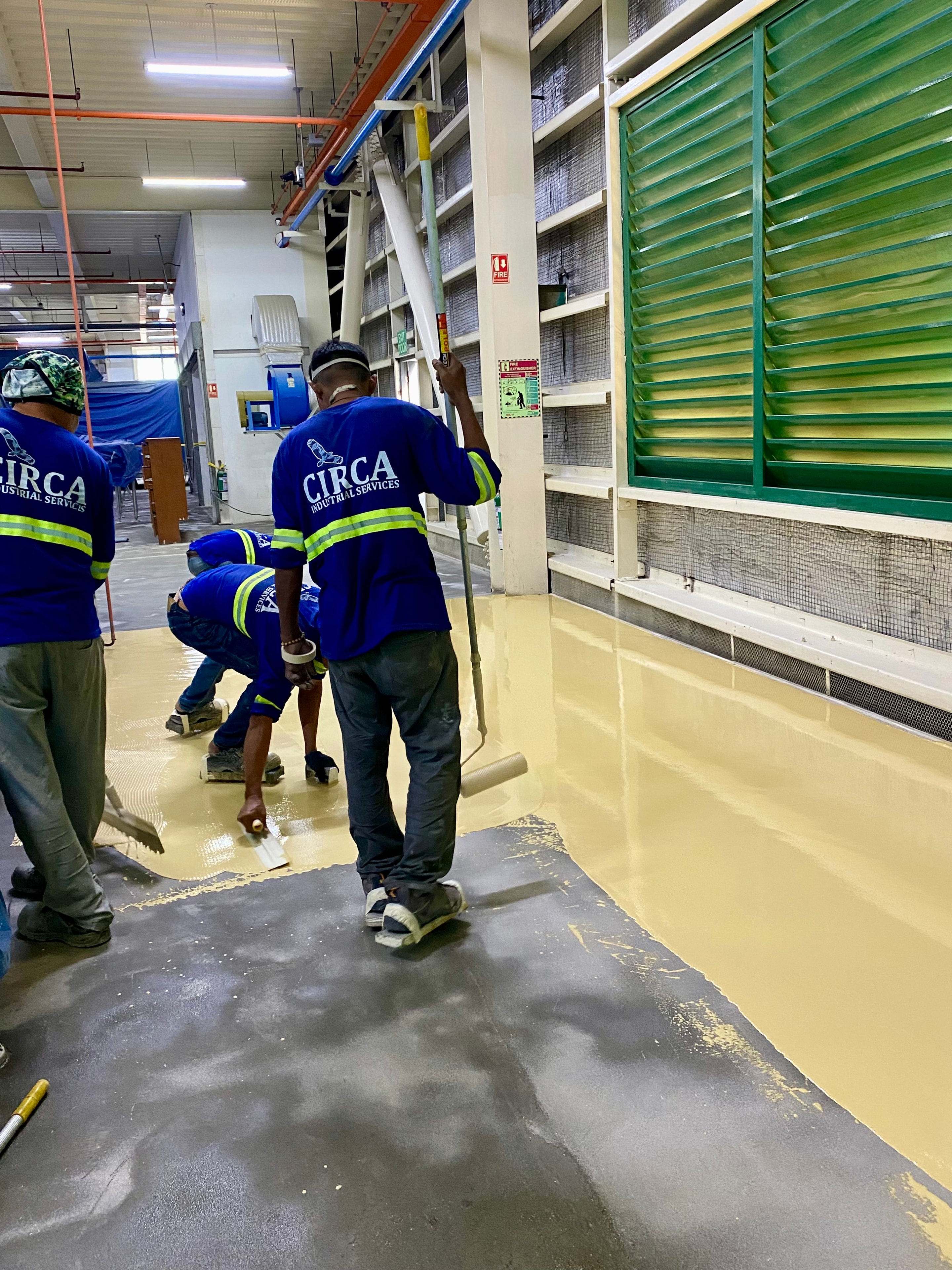
The right cleaning routine can double the service life of your resin floor.
Read articleFor estimates, please contact us at your convenience. We look forward to meeting you soon.
Address
Lot 24 Block 2 Horacio Aquino Street,
Green Valley Subdivision, Barangay San Francisco,
San Pablo City, Laguna, Philippines 4000
Mobile
+63 961 577 5115Hours
Monday–Saturday 8AM–5PM
Sunday: Closed